
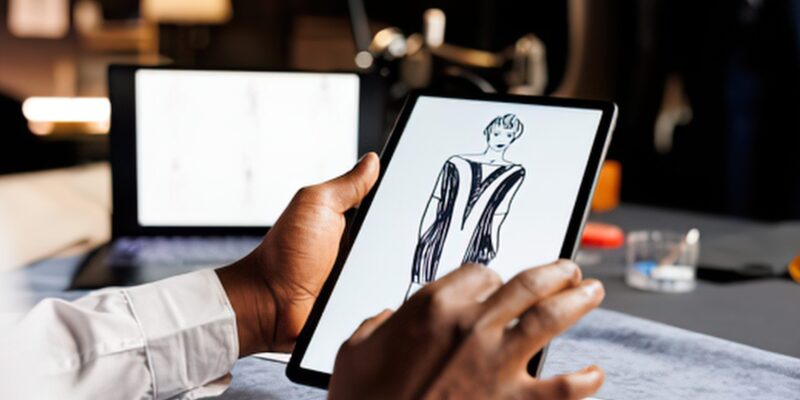
When a fashion or beauty brand starts selling in another country, translating the website isn’t usually enough. Attention also needs to be given to the product descriptions, ecommerce categories, catalogs, packaging, size guides, newsletters, and campaigns.
Why? All this content is part of the shopping experience.
A professional translation for fashion and beauty needs to ensure that the information is clear for the new audience, maintain the brand terminology, and adapt each piece of content while bearing in mind where it is going to be used.
Product descriptions: one of the first pieces of content that need to be translated
A product description is essential in an ecommerce because it contains most of the information that the user needs to know before buying.
Fashion encompasses fabrics, cuts, finishes, colors, materials, sizes, and care instructions, whereas beauty involves textures, tones, effects, characteristics, ingredients, and methods of use.
Consistency is particular important here.
Imagine an ecommerce with hundreds of products. If a particular fabric, finish, or characteristic is translated in multiple different ways depending on the product, the catalog loses uniformity and browsing can end up being confusing.
For that reason, specialized translation for fashion, beauty, and ecommerce brands does not only consist of translating each description in isolation. Is also involves maintaining common terminological criteria throughout the catalog.
What about categories, catalogs, and lookbooks?
These types of content also require consistency.
The categories of an online store need to be listed in a way that works naturally with the product descriptions, filters, and browsing. And it’s the same for catalogs, collections, and lookbooks.
A brand may have a very well-established personality in Spanish. When it is converted into another language, that personality shouldn’t disappear or turn into a completely different tone.
Specialized translation enables us to retain a consistent way of speaking about products, materials, collection, and characteristics, even when these types of content are published on different channels.
Product packaging and information: accuracy above all
The packaging may include commercial messages with information that is much more specific: method of use, product characteristics, composition, precautions, and instructions.
And not everything there is adapted to the same extent.
In certain content pieces for fashion and, especially, cosmetics, terminology and precision are extremely important. For that reason, it is best that each type of text is developed according to its function, instead of applying exactly the same criteria to everything.
Do campaigns need to be translated too?
If the brand communicates in that market, then yes.
Newsletters, adverts, promotional content, and campaigns need to sound natural in the target language and maintain the brand voice.
That doesn’t mean that all campaigns need an in-depth creative adaptation. Many can be resolved through . In some very specific cases, such as a slogan based on a pun or cultural reference that is difficult to translate, transcreation may be required.
The decision depends on the message and what it aims to achieve.
Why is it important to work with specialized translators?
Because a sportswear collection, luxury firm, cosmetics store, and skincare brand do not use the same language.
A good translation service for fashion and beauty needs to take into consideration the product, the audience, the channel, and the terminology used by the brand itself.
When there are also many products, multiple languages, or frequent updates, maintaining these common criteria becomes even more important.
As such, using an agency specializing in translation for fashion and beauty makes it possible to manage product descriptions, ecommerce, catalogs, packaging, and communications content consistently as and when the brand grows in new markets.
Frequently asked questions
Product descriptions, ecommerce categories, catalogs, lookbooks, packaging, size guides, newsletters, campaigns, and other commercial or information content.
Because fashion, beauty, cosmetics, and retail use their own vocabulary and conventions. Specialization helps to maintain accuracy and consistency across products and channels.
Yes, especially when they contain terminology associated with materials, finishes, cuts, characteristics, cosmetics, and methods of use.
No. Many can be translated professionally without the need for transcreation. This can be useful when the message relies on puns, cultural references, or creative resources that are difficult to translate into another language.
At blarlo, we work on fashion, beauty, cosmetics, retail, and ecommerce projects with specialized translators, and adapt every piece of content to the language, market, and type of project. Get a quote for your professional translation.